

FAKE X
PROBABLY GOING TO SPACE
WE ARE A SPACE EXPLORATION COMPANY. WE EXPLORE SPACE. SOMETIMES WE FIND IT. RESULTS MAY VARY. NOT RESPONSIBLE FOR LOST SATELLITES OR WOUNDED PRIDE.
NEXT LAUNCH WINDOW
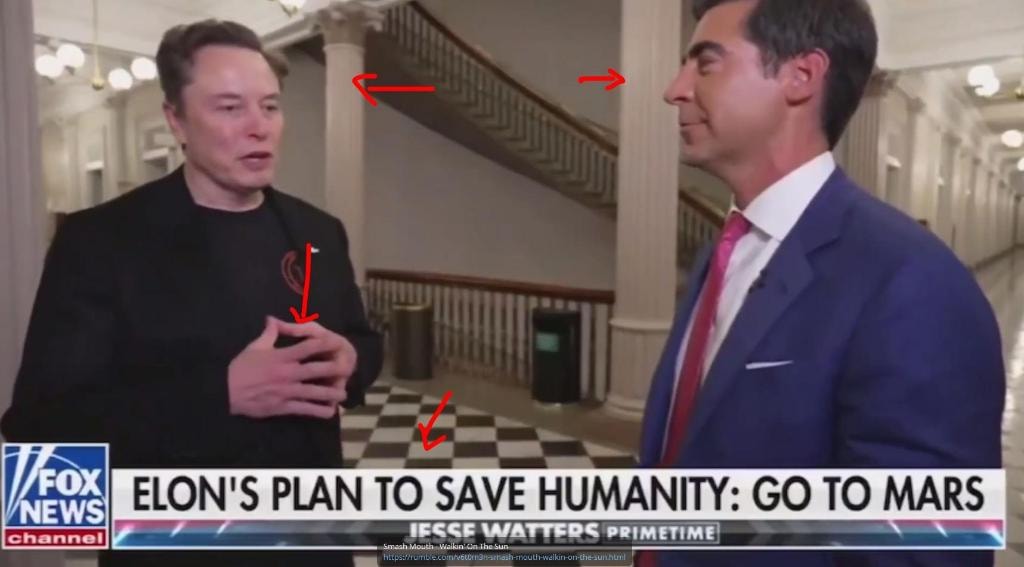
LODGE INTELLIGENCE DIVISION
ELON'S PLAN TO SAVE HUMANITY: GO TO MARS
A Fox News interview. A Lodge-sponsored floor. 33 stair bannisters. 2 columns. One hand gesture. And a headline that is exactly 33 characters long. We counted.
LODGE INTELLIGENCE DIVISION
ELON'S PLAN TO SAVE HUMANITY: GO TO MARS
A Fox News interview. A Lodge-sponsored floor. 33 stair bannisters. 2 columns. One hand gesture. And a headline that is exactly 33 characters long. We counted.
INTRODUCING THE
SPACE ROCKET
3.3-66.6
CODENAME: THE FLYING HELMET
We are extremely excited — possibly too excited, our legal team has asked us to calm down — to announce the Fake X Space Rocket 3.3-66.6, affectionately known internally as The Flying Helmet.
Boasting a record-shattering 33 booster engines — because 32 felt insufficient and 34 felt excessive — the Flying Helmet represents the absolute pinnacle of what happens when you give engineers unlimited biscuits and a very loose brief.
A test launch is currently scheduled for late summer 2099, pending some routine quality assurance testing. The QA team has been notified. They have not yet responded. We consider this normal.
Regarding crew selection: we have not yet spoken to Katy Perry about joining the mission. We are not entirely sure her ego would fit inside the payload fairing, and she has a well-documented tendency to open doors — something we are keen to avoid at approximately 33,000 feet. Or at any feet, really. The door situation is non-negotiable. We wish her well on the ground.
* "Late summer" is defined loosely. "2099" is also defined loosely. "Quality assurance" is perhaps the loosest definition of all.
THE BIG BANG:
A BRIEFING FOR
PEOPLE LIKE US
We will be honest with you. We build rockets. We point them upward. What actually happens between ignition and space is, frankly, a bit of a mystery to us. The universe is large. We are not entirely sure why.
Which is why we consulted the one space science expert we actually trust — a person who can explain the Big Bang, the fabric of spacetime, and the general complexity of how it all ties together, without making us feel too bad about ourselves.
We watched this briefing three times. We understood approximately 11% of it. We found this deeply reassuring. If the universe is this complicated, it is frankly impressive we got anything off the ground at all.
We recommend watching with an open mind, a notepad, and something strong to drink.
WHY IS THERE
A BUBBLE
IN SPACE?
NASA released this footage. They wanted it short. We understand why. The AstroNOTs — as we call them — can only hold their breath for approximately 33 seconds underwater. And we have questions about that too. But one crisis at a time.
There is a bubble. In space. A water bubble. Floating. Wobbling. Doing what bubbles do, which is exist in water. Space, as we have been told repeatedly, is a vacuum. Vacuums do not have bubbles. Water does.
Is space made of water? It could be. The Firmament is water — always has been, it says so in the literature. We have water down here too. Oceans of it. Lakes. Puddles. The point is: water is everywhere. What exactly are they up to?
Is it a giant swimming pool? Does it have a pool bar? Are there sun loungers? Is that why they keep going back? We need to know. God damn you, we need to know.
THE 3.3-STAGE ROCKET.
MANKIND'S NEXT GIANT LEAP.
Seven years. Four postgrad qualifications. Twenty-three funding rejections. One picnic table in Hertfordshire. This is what the bleeding edge of aerospace looks like.
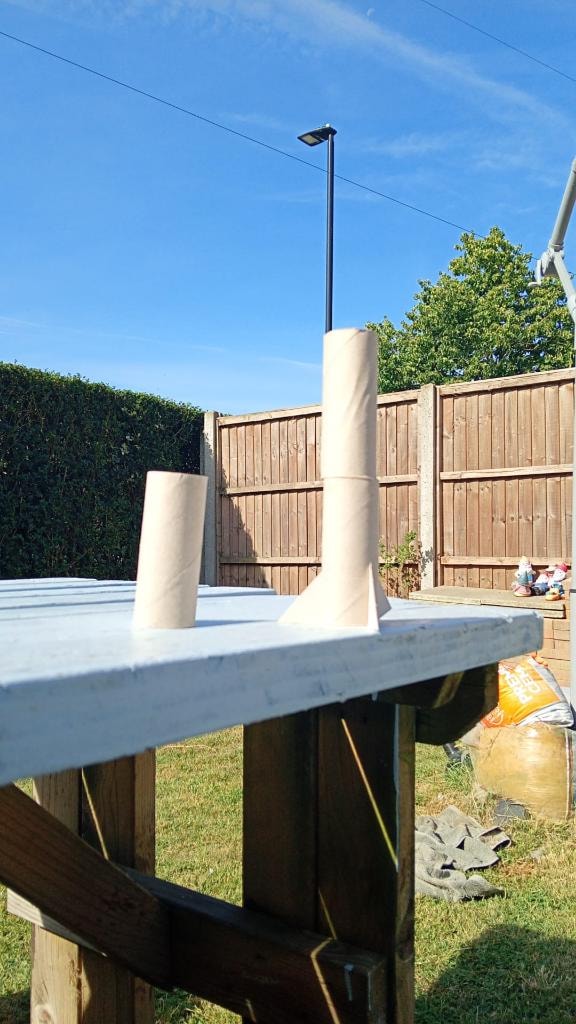
THE 3.3-STAGE ROCKET — PRE-LAUNCH CONFIGURATION
Bog Roll Composite™ fuselage. Picnic table launchpad. Blue sky. High hopes.
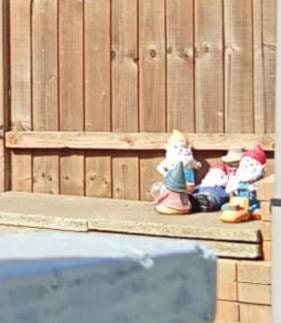
THE ENGINEERING TEAM — PRE-LAUNCH BRIEFING
Marvelling at their own brilliance. As they should.
7
YEARS IN DEVELOPMENT
Six of which were spent on the funding applications.
3.3
FEET — TARGET ALTITUDE
Previous record: 3.3 feet. We are targeting 3.4.
23
FUNDING REJECTIONS
Including one from a man at a bus stop.
£0
DEEP STATE FUNDING
We have checked. Repeatedly. Nothing.
THE BUILD — SEVEN YEARS OF ENGINEERING EXCELLENCE
The 3.3-Stage Rocket has been in development since 2019. The first two years were spent on the theoretical framework. The third year was spent on the funding applications. Years four and five were spent on the follow-up funding applications. Year six was spent on the CostCo membership application, which was also rejected. Year seven has been the productive one. We have the rocket. It is on the table. It is, in our assessment, magnificent.
The fuselage is constructed from Bog Roll Composite™ — a proprietary single-ply cellulose laminate that is, weight-for-weight, approximately as strong as a paper towel. The staging mechanism is theoretical. The propulsion system is pending. The launchpad is a picnic table in Hertfordshire, which has been load-tested to 180kg and is structurally sound. We are ready.
THE ENGINEERING TEAM — A WORD ON THEIR BRILLIANCE
Behind every great rocket is a great team. The FakeX engineering team has been captured here in a rare moment of collective reflection — reviewing the pre-launch data, marvelling at what seven years of dedication, sacrifice, and repeated rejection by the scientific establishment has produced. They are, in our assessment, visibly moved.
The team has asked us to note that they have been involved from the very beginning. They were there for the first design review. They were there for the 23rd funding rejection. They were there when the CostCo application came back. They have not complained once. They are professionals. We are proud of them. We will not be naming them for security reasons.
THE MISSION — WHY THIS MATTERS FOR MANKIND
If the 3.3-Stage Rocket achieves an altitude greater than 3.3 feet, it will represent the single greatest achievement in British aerospace since Tim Peake went to space without us. It will prove that Bog Roll Composite™ is a viable structural material. It will prove that a picnic table in Hertfordshire is a viable launchpad. It will prove that 23 funding rejections is not the end of the story.
We fully expect to lose the telemetry data. This is standard practice. NASA lost the original Apollo 11 telemetry tapes — 700 boxes of magnetic data, the greatest technical achievement in human history, recorded on drives that were subsequently bulk-erased and reused for other purposes. Other purposes. We are not saying what those purposes were. We are saying that if it is good enough for NASA, it is good enough for FakeX. Our USB drive currently has 47 photos of a fox on it. We consider this acceptable.
THE DATA — A NOTE ON TELEMETRY AND FOXES
FakeX has invested in a state-of-the-art telemetry system for the 3.3-Stage Rocket launch. It is a GoPro. It has 64GB of storage. Approximately 61GB is currently occupied by footage from Operative Delta's Lanzarote trip, a parrotfish, and 47 photos of a fox that visits the field on Tuesday evenings. We have 3GB available for the most important rocket launch in British history.
In the event that we exceed 3.3 feet and achieve something genuinely historic, we have a plan for the data. We will back it up. We will put it somewhere safe. We will label the drive clearly. We will not, under any circumstances, reuse the drive for wildlife photography. We are making this commitment publicly and in writing. We are aware that NASA made similar commitments. We are choosing not to think about that.
CLASSIFIED FOOTNOTE — APOLLO DATA — INTERNAL USE ONLY
Between 1969 and 1972, NASA landed twelve human beings on the Moon and brought them all home safely. The original slow-scan television tapes from Apollo 11 — the single most watched broadcast in human history — were subsequently stored in a warehouse, mislabelled, and in 2006 were confirmed to have been bulk-erased and reused. The original Saturn V blueprints were also lost. The original F-1 engine designs were also lost. NASA has since had to reverse-engineer its own Moon rocket from scratch. FakeX considers this deeply relatable. We have lost our car keys four times this month. We are in good company.
RADAR.
OVER THE CURVE.
EXPLAIN THAT.
FakeX does not need radar. We can see our failures from here without binoculars. But the question has been raised — and it is a good question — how does radar work over the curve? We have looked into this. We have several concerns.
RADAR PROPAGATION — FIELD EVIDENCE — NAVIGATION DESK
The atmosphere is doing a lot of heavy lifting in these explanations. We are not satisfied.
3,000
KM — CLAIMED RADAR RANGE
The geometric horizon at sea level is 4.7km. We have questions.
2
UNIVERSITIES — NO REPLY
One replied. Said "refraction" again. We are not satisfied.
0
RADAR UNITS PURCHASED
We looked on eBay. Spares or repair. We decided against.
1
OPERATIVE ON THE ROOF
Operative Bravo. Good thermos. Excellent binoculars. Adequate visibility.
THE CURVE PROBLEM — A TECHNICAL ASSESSMENT
Radar, as we understand it, travels in straight lines. This is not disputed. The Earth, as the mainstream scientific establishment would have you believe, is a sphere. This is disputed — at least in this office, at least on Tuesdays. If both of these things are true simultaneously, then radar should — by the laws of geometry that we all learned at school and have not forgotten — disappear over the horizon at approximately the same rate as a ship, a lighthouse, or a moderately tall man standing at a distance.
It does not do this. Radar routinely detects objects at ranges that, on a spherical Earth, would place them well below the geometric horizon. The establishment explanation involves something called atmospheric refraction. We have read about atmospheric refraction. We have several questions. None of them have been answered to our satisfaction. The atmosphere is, apparently, bending the radar waves around the curve. The atmosphere has never done anything for us. Our last three launches were in light drizzle.
FAKEX DOES NOT NEED RADAR — A CLARIFICATION
We wish to be absolutely clear: FakeX does not use radar. We have considered radar. We looked at the price of radar. We looked at the price of a second-hand radar unit on eBay. We looked at the price of a radar unit described as 'spares or repair' on eBay. We decided against radar on the grounds that our launches have, to date, been entirely visible to the naked eye from the car park.
Our current detection methodology involves Operative Bravo standing on the roof of the facility with a pair of binoculars and a thermos flask. He has a good view. He can see the rocket go up. He can see it come down. He can see it come down quite quickly. He has a notebook. He writes things in it. We consider this a robust telemetry solution and one that does not require ionospheric bounce to function.
THE IONOSPHERIC BOUNCE — WE HAVE READ ABOUT THIS
Over-the-horizon radar, the establishment tells us, works by bouncing signals off the ionosphere — a layer of the atmosphere approximately 60 to 1,000 kilometres above the Earth's surface. The signal goes up, hits the ionosphere, comes back down, hits the target, goes back up, hits the ionosphere again, and returns to the receiver. This is the explanation. This is what they are going with.
FakeX has several concerns about this explanation. The first concern is that the signal appears to know where it is going. The second concern is that the ionosphere is described as 'variable' and 'dependent on solar activity', which means the radar is bouncing off something that changes constantly and cannot be precisely located. The third concern is that this is exactly the sort of explanation you would give if you needed to explain something that should not work on a curved Earth but does. We are not saying anything. We are just noting the coincidence.
CONCLUSION — OPERATIVE BRAVO REMAINS ON THE ROOF
FakeX has reviewed the available evidence on radar propagation, atmospheric refraction, ionospheric bounce, and the geometric horizon. We have concerns. We are not saying the Earth is flat. We are saying that the explanation for how radar works over the curve involves a level of atmospheric cooperation that we find suspicious.
The atmosphere is doing a lot of heavy lifting in these explanations. It is refracting the radar waves. It is bouncing the signals. It is, apparently, curving the beam just enough to follow the surface of the Earth at exactly the right rate to make long-range detection possible. This is very convenient. We find it suspicious. We will continue to monitor the situation from the roof. Operative Bravo has a good thermos. He has been up there since Tuesday. He is fine. He says the view is excellent and that he can see for miles. We have not told him how far miles should be on a curved Earth. We do not want to worry him.
NAVIGATION DESK — INTERNAL NOTE — NOT FOR PUBLICATION
Operative Bravo has been on the roof since Tuesday. He has consumed approximately four thermos flasks of tea and one packet of digestive biscuits. He has seen three pigeons, one fox (the Tuesday fox), and the 3.3-Stage Rocket on the picnic table. He has not seen any radar waves. He acknowledges that radar waves are invisible. He considers this suspicious. We have told him to come down for lunch. He says he is fine. He says the view is excellent. He says he can see for miles. We have not told him how far miles should be on a curved Earth. We do not want to worry him before the launch.
IF WE GET YOU
THERE, YOU CAN
STAY THERE.
Congratulations. You made it to the Moon. Against all odds, against the advice of your family, and against several strongly-worded letters from your GP — you are on the Moon.
Now what? Well, we have good news. Our exclusive lunar accommodation partner has been quietly building up there since approximately 2031. The rooms are grey. The views are grey. The regolith is grey. We consider this minimalist chic.
Enjoy world-class hospitality — or rather, moon-class hospitality, as Earth-class standards no longer apply at this altitude. Amenities include oxygen (most of the time), a bed (bolted down, for obvious reasons), and a view of Earth that will make every single person you've ever met look absolutely tiny. Which is therapeutic.
Book now. The Moon isn't going anywhere. It has been doing laps for 4.5 billion years and shows no signs of stopping. We cannot say the same for our launch schedule.
* Fake X accepts no responsibility for late arrivals, wrong celestial bodies, or existential crises upon landing. Accommodation subject to availability. "Availability" subject to us actually getting there. No refunds. There is nowhere to spend a refund anyway.
* One star deducted pending resolution of the dust-in-everything situation.
WE SHOOT
THINGS
INTO SPACE
FAKE X WAS FOUNDED ON THE BOLD PREMISE THAT SPACE IS OUT THERE, AND WE SHOULD PROBABLY GO TO IT. OUR TEAM OF HIGHLY MOTIVATED INDIVIDUALS (AND ONE VERY CONFUSED INTERN) WORK TIRELESSLY TO ADVANCE THE CAUSE OF SPACE EXPLORATION.
WE HAVE LAUNCHED SEVERAL THINGS. MOST OF THEM CAME BACK. WE CONSIDER THIS A SUCCESS.
RECENT
OPERATIONS

MISSION 001
OPERATION YEET
Details withheld for national security reasons. Or embarrassment. Probably embarrassment.

MISSION 002
DEFINITELY ORBIT
We went up. We came down. The important thing is we went up first.

MISSION 003
SPACE THING
Our most ambitious mission yet. We are not entirely sure where it is.

MISSION 004
GROUND CONTROL
The team that makes it all happen. From the ground. Safely.
UPLOAD YOUR
MISSION
AUTHORIZED PERSONNEL MAY SUBMIT MISSION FOOTAGE, PHOTOGRAPHS, AND OTHER CLASSIFIED MATERIALS FOR INCLUSION IN THE FAKE X MISSION ARCHIVE. SECURITY CLEARANCE REQUIRED. PROBABLY.